
Computer Laboratory
Develop digital skills through practical learning, technology-based activities, problem solving and hands-on computer education.
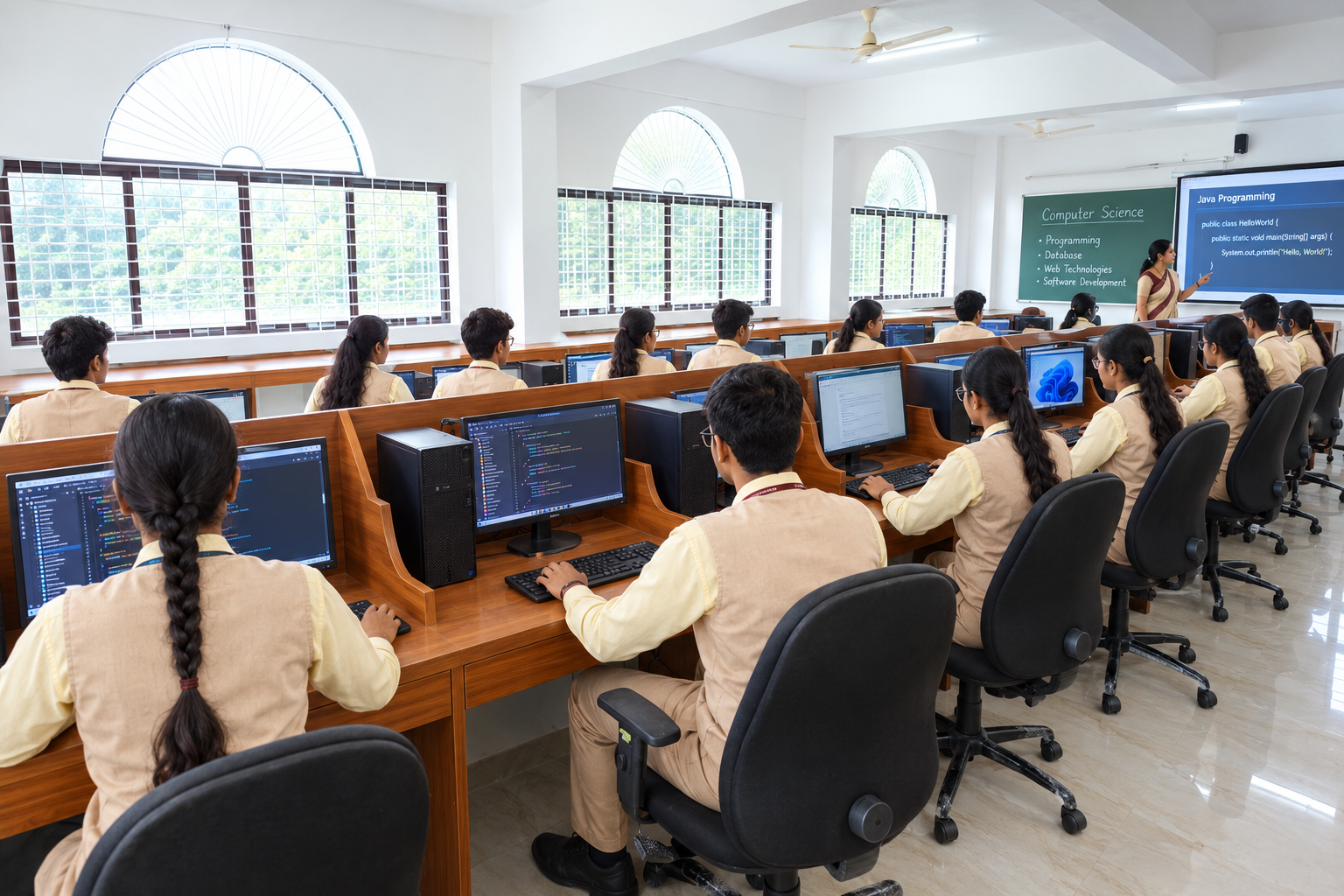
Learning Technology Through Practice
The Computer Laboratory provides students with an environment to understand technology through practical learning and regular hands-on activities.
Students can strengthen their digital knowledge, develop logical thinking and learn to use technology confidently as part of their academic journey.
Building Strong Digital Foundations
Computer learning combines concepts, practical activities and digital problem solving to help students become confident technology users.
Computer Fundamentals
Understand the fundamentals of computers, digital systems and everyday technology.
Programming Concepts
Develop logical thinking through programming, algorithms and structured problem solving.
Digital Applications
Build familiarity with commonly used digital tools and applications for academic work.
Internet & Technology
Understand modern digital technologies and responsible use of online resources.
Data & Information
Learn how digital information is organised, processed and used for practical purposes.
Logical Problem Solving
Strengthen analytical thinking by approaching tasks systematically and logically.
From Concepts to Hands-On Experience
Practical computer education helps students connect classroom concepts with real digital activities.
Hands-On Computer Practice
Students can reinforce their learning by working directly with computers and digital applications.
- Regular practical activities
- Digital application practice
- Problem-solving exercises
- Technology-based learning
Academic Technology Skills
Computer education supports students in developing technology skills that can complement their wider academic learning.
- Research and information skills
- Digital presentation skills
- Logical thinking
- Independent learning
Skills That Go Beyond the Classroom
The computer laboratory supports academic learning while encouraging students to develop useful technology and personal skills.
Practical Learning
Learn by doing and strengthen understanding through practical activities.
Digital Confidence
Develop confidence while working with digital tools and technology.
Logical Thinking
Approach problems systematically and develop structured thinking.
Problem Solving
Apply reasoning and practical methods to solve technology-related tasks.
Independent Learning
Encourage students to explore technology and develop self-directed learning habits.
Faculty Guidance
Receive academic guidance while learning and practising computer-based activities.
Learn • Practise • Create
Computer education is not only about understanding technology — it is about developing the confidence and thinking skills needed to use technology effectively.
Developing Future-Ready Skills
Practical technology education can contribute to academic confidence, creativity and overall student development.
Supporting Future Academic Goals
Strong digital literacy and logical thinking can support students across different areas of higher education and competitive examination preparation.
NEET
Analytical and technology-supported learning habits can complement science preparation.
JEE
Logical reasoning and structured problem solving are valuable skills for technical preparation.
KCET
Digital confidence and systematic learning can support broader academic preparation.
Building Digital Confidence for the Future
At Navajnanasudha Pre-University College, technology, practical learning and academic development come together to help students grow with confidence.